Page last checked
Research compound · not FDA-approved
LL-37
LL-37 is a peptide 37 amino acids long that your own white blood cells make. It kills bacteria by breaking open their outer membrane.
What matters first
- Why people look it up
- It is sold for stubborn infections, for biofilms, and for gut complaints.
- What the evidence shows
- It has reached people twice in registered work: injected into melanoma deposits, and applied to venous leg ulcers. Neither study tested an infection. On the ulcers the two lower strengths improved healing while the highest did no better than placebo. The FDA cited animal findings of harm to male reproduction, and of tumor-promoting activity in some tissues.
- Dose status
- LL-37 is not FDA-approved, so no dosing label exists for it. The sections below explain what researchers tested and what remains unknown.
What is known about LL-37
LL-37 is a 37-amino-acid peptide made by the human immune system. White blood cells store its larger parent protein and release LL-37 across the skin, gut, and airways. It can break open bacterial membranes and signal to immune cells. Registered studies have used it in people twice: injected into melanoma tumors and placed on leg ulcers. Both studies were small, and neither tested the infection and gut uses these vials are sold for.
| Topic | Value |
|---|---|
| Strongest source | limited human data |
| FDA approval | Not FDA-approved |
| Studied dosing | 250–500 mcg once every 7 days for up to 8 weeks, injected into a cutaneous or subcutaneous melanoma deposit (2 participants at 250 mcg, 1 at 500 mcg — 3 treated in all) — from clinical trials |
| Typical vials | 5 mg |
Every row links back to a source listed below. These facts are for reference, not a personal recommendation.
What the evidence for LL-37 is
People have received this compound in a documented setting, or it has approval outside the United States. The available human evidence is still too limited to show a clear dose-and-result pattern for US use.
- What it establishes
- What it does not establish
Check the country, study size and reason it was used. Do not treat limited human data as an FDA-approved schedule.
Evidence snapshot and shareable image
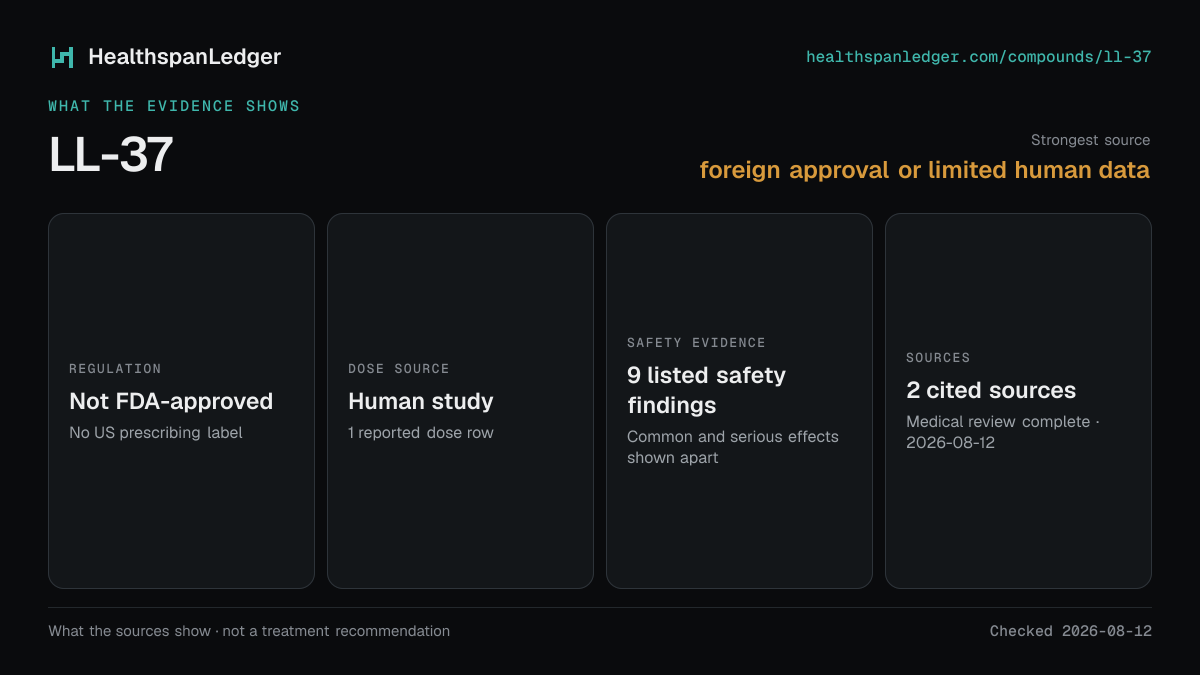
Evidence snapshot
Foreign approval or limited human data
- Regulation
- Dose source
- Safety evidence
- Sources
Where LL-37 is in clinical trials
No trial of this compound is registered on ClinicalTrials.gov.
That is worth sitting with. Nobody has registered a study to find out whether LL-37 works in people, so no result is coming and no date is worth waiting for. Sellers are not waiting for that work either.
ClinicalTrials.gov · retrieved 2026-09-27
Regulatory status
The body makes LL-37, but that does not make a product approved.
No regulator has approved it as a drug. FDA lists it under substances nominated but withdrawn. The agency cites immune reactions, limited safety data and harm seen in animals.
FDA plans to review LL-37 at a compounding meeting before the end of February 2027. No date or docket exists yet.
Full regulatory tracker →Where to go next on LL-37
The related pages keep each topic with its evidence.
LL-37 side effects, as the sources describe them
Convert an LL-37 amount to units with the LL-37 dosage calculator
Choosing a water volume for a 5 mg LL-37 vial
Where LL-37 sits among the skin compounds
The healing and recovery page LL-37 appears on
Check the same draw on a vial that is not LL-37
The immune support page LL-37 appears on
Compare the LL-37 schedule against the others
Registered trials for LL-37 and the rest
The proceedings behind the LL-37 note on this page
Safety notes
Questions about LL-37
Is LL-37 FDA-approved?
How is LL-37 taken?
How does LL-37 differ from the other compounds in this class?
What is not known about LL-37?
- Induction of Antitumor Response in Melanoma Patients Using the Antimicrobial Peptide LL37 (NCT02225366) — MD Anderson Cancer Center, phase 1/2, completed, results postedretrieved 2026-08-12Human trial
- Dermatologic toxicity from novel therapy using antimicrobial peptide LL-37 in melanoma: a detailed examination of the clinicopathologic features (Journal of Cutaneous Pathology, 2018)retrieved 2026-08-12limited human data